
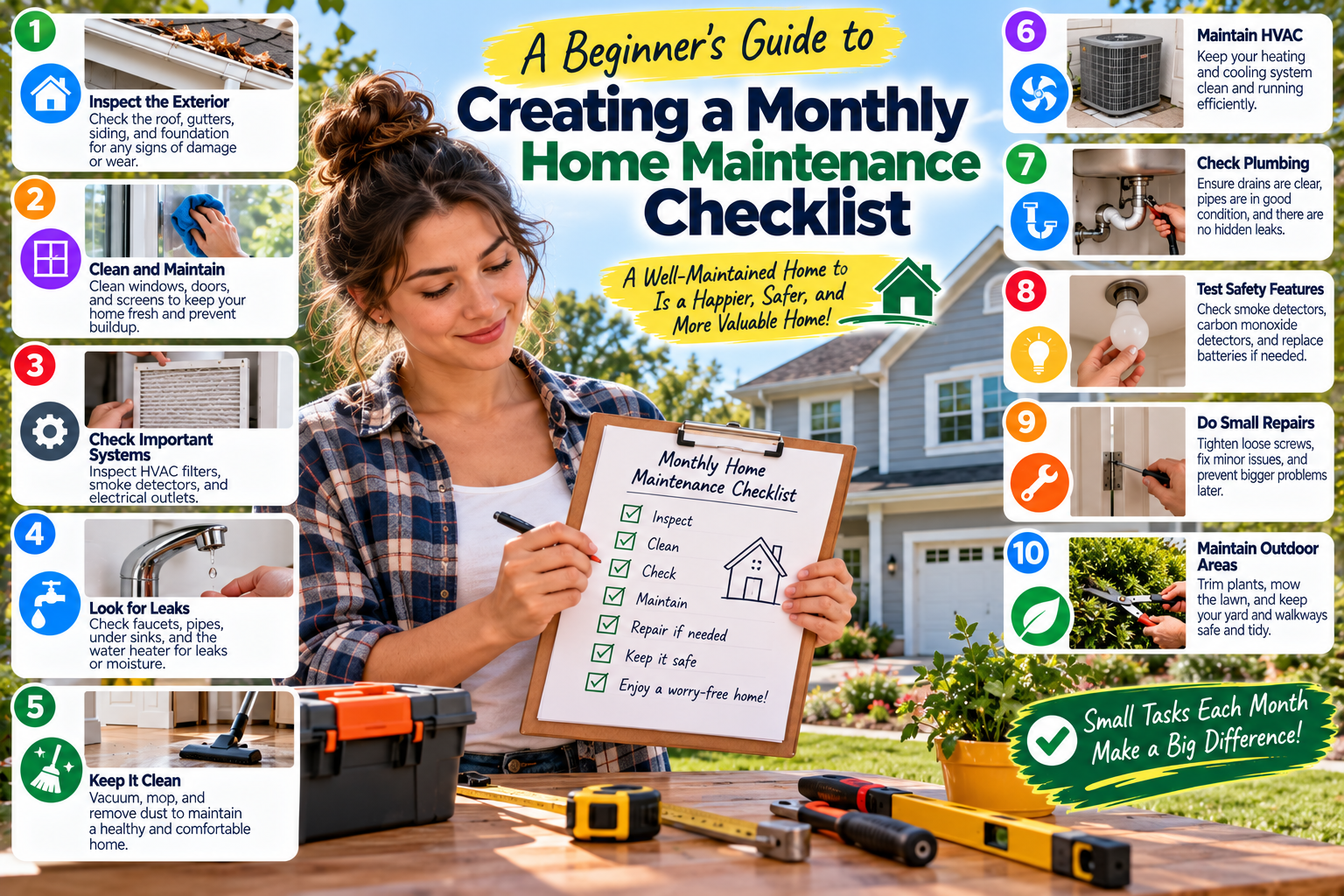
Owning a home means there is always something that needs attention. A leaking faucet, dirty filter, loose door handle, or clogged drain may seem small today, but ignoring minor problems can sometimes lead to bigger repairs later.
The good news is that home maintenance doesn’t have to be complicated.
A simple monthly home maintenance checklist can help you stay organized and notice potential problems early.
Never created one before? Don’t worry. This beginner-friendly guide will help you get started.
Why Do You Need a Home Maintenance Checklist?
Think about the last time something unexpectedly broke in your home.
Did you notice any warning signs beforehand?
Regular inspections can help you spot issues such as water leaks, damaged seals, unusual appliance behavior, or other maintenance needs.
A checklist also removes the pressure of trying to remember everything.
Instead of thinking, “What should I check this month?” you already have a simple plan.
Step 1: Divide Your Home Into Areas
Don’t try to inspect your entire home randomly.
Divide it into several basic areas:
Kitchen
Bathrooms
Bedrooms and Living Areas
Utility Areas
Home Exterior
Now you can inspect one area at a time.
This makes home maintenance feel much more manageable.
Step 2: Check for Water Leaks
Water can cause significant damage when leaks go unnoticed.
Once a month, take a few minutes to look underneath sinks, around toilets, near appliances that use water, and around your water heater if safely accessible.
Look for:
- dripping water;
- damp areas;
- water stains;
- unusual odors; or
- visible corrosion.
Monthly challenge: Check underneath every sink in your home. How long does it take? Probably only a few minutes.
If you discover a significant or unexplained leak, consider contacting a qualified plumber.
Step 3: Inspect Your HVAC System
If your home uses a heating, ventilation, and air-conditioning system, check its accessible filters regularly.
Some filters require more frequent replacement than others, so follow the recommendations for your specific system.
Also pay attention to unusual noises, odors, or changes in performance.
You don’t need to repair complicated HVAC problems yourself. Your job is simply to notice when something seems different.
Step 4: Test Safety Devices
Your monthly checklist should include important home safety equipment.
Test smoke alarms and carbon monoxide alarms according to their manufacturers’ instructions.
Check whether devices or batteries need replacement.
If you have other safety equipment, such as fire extinguishers, inspect them according to the manufacturer’s recommendations.
This is one part of your checklist you should not skip.
Step 5: Check Faucets, Toilets, and Drains
Walk through your kitchen and bathrooms.
Are any faucets dripping?
Is a toilet running continuously?
Is a sink or shower draining more slowly than usual?
Small plumbing problems are often easier to address when discovered early.
Try this: Stand quietly near each bathroom for a moment. Can you hear running water when nobody is using anything?
If yes, investigate further.
Step 6: Look at Doors and Windows
Open and close your frequently used doors and windows.
Do they operate normally?
Check locks, handles, hinges, and visible seals.
You can also look for gaps or damaged weatherstripping that may allow outside air or moisture to enter.
Minor maintenance may improve comfort and prevent some problems from becoming worse.
Step 7: Give Your Appliances a Quick Inspection
You do not need to disassemble appliances every month.
Simply pay attention to them.
Check your refrigerator, washing machine, dishwasher, dryer, and other frequently used appliances.
Look for unusual sounds, leaks, damaged cords, unusual smells, or changes in performance.
Follow the manufacturer’s instructions for cleaning filters, vents, and other serviceable components.
Step 8: Walk Around the Outside of Your Home
A quick exterior inspection can reveal problems you may not notice from indoors.
Walk around the property and look at accessible areas.
Do you see damaged siding, blocked drainage areas, vegetation growing too close to the building, or visible roof problems?
You can inspect the roof from the ground rather than climbing onto it.
If something looks unsafe or difficult to access, leave the inspection to a qualified professional.
Step 9: Check for Signs of Pests
Look for unusual signs around kitchens, storage areas, basements, garages, or other locations where pests might appear.
Possible signs can include droppings, damaged packaging, nests, or unexplained damage.
Finding a problem early may make it easier to address.
For significant infestations or potentially dangerous pests, professional assistance may be appropriate.
Step 10: Choose One Small Maintenance Project
Not every monthly task needs to be an inspection.
Choose one small project each month.
For example:
January: Organize one storage area.
February: Check bathroom caulk.
March: Clean appropriate vents or covers.
April: Inspect exterior drainage areas.
Your schedule will depend on your climate, home design, appliances, and local conditions.
The goal is simply to spread maintenance throughout the year instead of trying to do everything at once.
Create Your Simple Monthly Checklist
Your checklist does not need to be complicated.
Start with something like this:
☐ Check sinks and plumbing for leaks
☐ Inspect HVAC filter
☐ Test smoke and carbon monoxide alarms
☐ Check toilets and drains
☐ Inspect doors and windows
☐ Look over major appliances
☐ Walk around the exterior
☐ Look for signs of pests
☐ Complete one small maintenance project
That’s already a useful starting point.
You can add or remove tasks based on your particular home.
Try the 30-Minute Monthly Challenge
Choose one day every month and set a timer for 30 minutes.
Walk through your home with your checklist.
Don’t try to repair every problem immediately.
Instead, identify what needs attention.
Create three categories:
OK — Nothing needs to be done.
WATCH — Keep an eye on the issue.
FIX — Maintenance or professional attention may be needed.
This makes the process much easier to manage.
Keep a Simple Maintenance Record
You don’t need complicated software.
Use a notebook, spreadsheet, calendar, or notes app.
Write down what you checked and anything unusual you discovered.
For example:
“Kitchen sink: small leak noticed — needs repair.”
“HVAC filter: checked.”
“Bedroom window: seal looks damaged — inspect again next month.”
These short notes can help you remember what has already been done.
Know When DIY Is Not the Best Choice
A maintenance checklist helps you identify problems. It does not mean you must repair everything yourself.
Some jobs may involve electricity, gas, roofing, structural components, major plumbing, or specialized equipment.
If a task is dangerous or beyond your experience, contact an appropriately qualified professional.
Knowing when not to DIY is also part of responsible home maintenance.