
Buying a used refrigerator can be a smart way to save money, especially when you are furnishing a new home, apartment, rental property, or office.
But a low price does not always mean a good deal.
A refrigerator that looks perfect from the outside could have cooling problems, damaged seals, strange noises, or other issues that may become expensive later.
Before paying, take a few minutes to inspect it carefully.
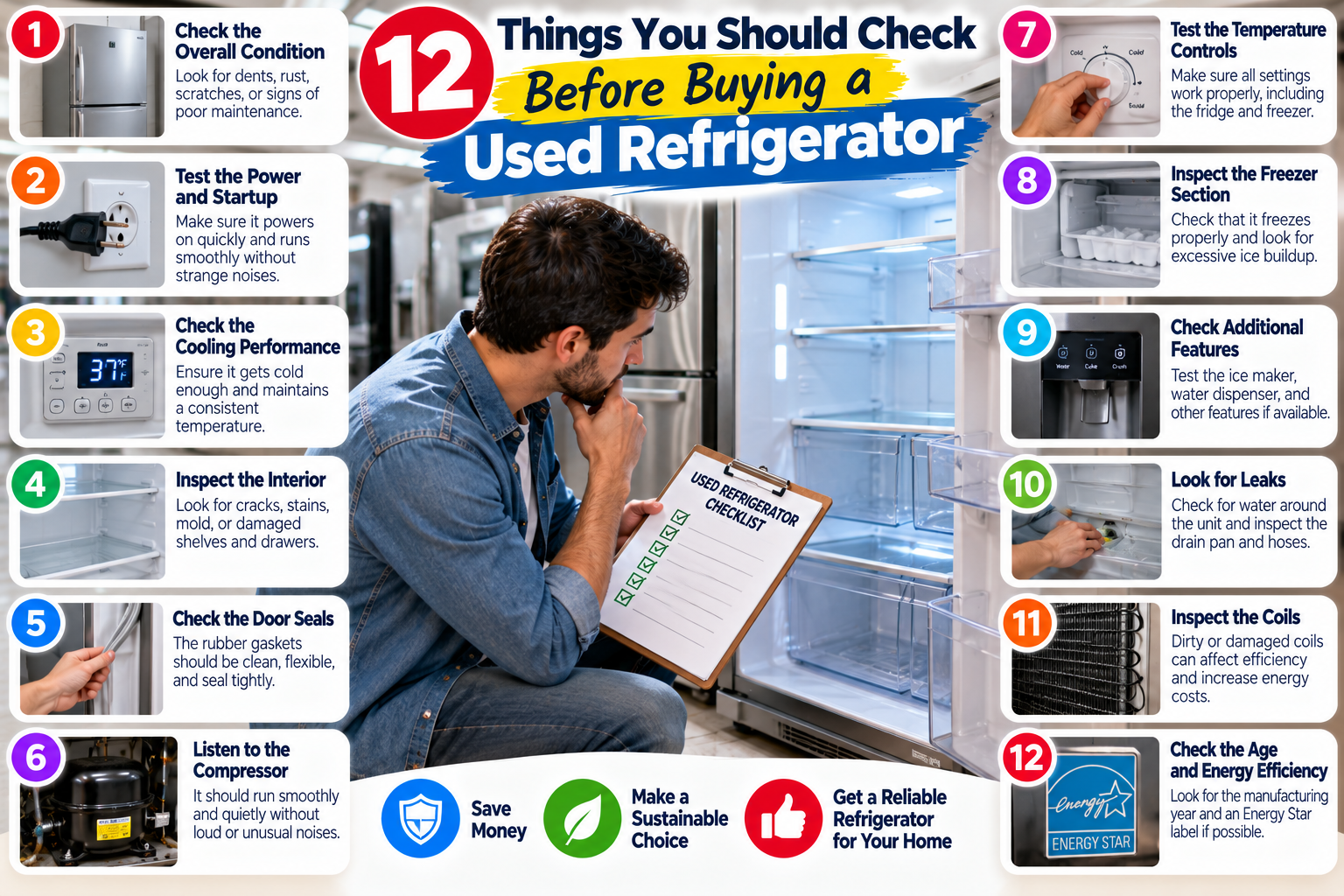
Here are 12 things worth checking.
1. Check the Age
Start by asking a simple question:
“How old is this refrigerator?”
Look for the model and serial information, which may help you identify its approximate age and specifications.
An older refrigerator is not automatically a bad purchase, but age can help you decide whether the asking price makes sense.
2. Make Sure It Actually Gets Cold
Never judge a refrigerator only by its appearance.
If possible, ask the seller to plug it in before you arrive so you can confirm that the refrigerator and freezer compartments are cooling.
Does the interior feel properly cold?
Is the freezer actually freezing?
If the seller cannot demonstrate that the appliance works, consider the additional risk before buying.
3. Listen for Unusual Noises
Refrigerators naturally make some sounds during operation.
However, unusually loud buzzing, repeated clicking, grinding, or other unfamiliar noises may deserve further investigation.
Quick test: Stand quietly beside the refrigerator for a minute and listen.
If something sounds suspicious, ask the seller about it.
4. Inspect the Door Seals
Open the door and examine the rubber gasket around its edges.
Look for cracks, tears, loose sections, or obvious damage.
Then close the door.
Does it close securely?
A damaged seal can allow cold air to escape and may affect efficiency and cooling performance.
5. Look for Leaks
Check underneath and around the refrigerator.
Do you see water, stains, rust, or signs of previous leaks?
A small amount of moisture may have a simple explanation, but unexplained water should not be ignored.
Ask the seller about anything unusual you notice.
6. Check the Interior
Open every compartment.
Look at the shelves, drawers, door bins, and interior surfaces.
Are shelves cracked?
Are drawers missing?
Does the interior have significant damage?
Replacement parts can add to the real cost of your “cheap” refrigerator.
7. Smell the Refrigerator
Yes, smell it.
Strong odors can sometimes be difficult to remove, especially if food was left inside for a long period.
A refrigerator may look clean while still carrying unpleasant smells.
Ask yourself:
“Would I be comfortable storing my food in here?”
If the answer is no, think carefully before buying.
8. Check for Excessive Rust or Damage
A few cosmetic scratches may not affect performance.
Significant rust, damaged hinges, badly dented panels, or damaged components are different.
Pay particular attention to areas around doors, hinges, and the lower part of the appliance.
Separate cosmetic problems from issues that could affect normal operation.
9. Inspect the Power Cord and Plug
Look at the visible electrical cord and plug.
Do you see cuts, exposed wires, burn marks, unusual repairs, or other damage?
Do not use an appliance with obviously damaged electrical components.
If you are uncertain about its electrical condition, have it inspected by a qualified technician.
10. Research the Model
Before handing over your money, search for the refrigerator’s exact model number.
Look for basic specifications, dimensions, user manuals, common owner complaints, and availability of replacement parts.
This can take only a few minutes on your phone.
It may also help you discover whether the refrigerator will actually fit your kitchen.
11. Check the Size Before Buying
This sounds obvious, but it is easy to forget when you find a great deal.
Measure:
Your kitchen space
Doorways
Hallways
Stairs, if applicable
Then compare those measurements with the refrigerator.
Also consider the space needed for ventilation and door opening according to the manufacturer’s installation instructions.
A refrigerator is not a bargain if you cannot get it through the front door.
12. Calculate the Real Cost
Finally, don’t focus only on the selling price.
Think about:
Purchase price + transportation + installation + missing parts + possible repairs
A very cheap refrigerator that needs immediate repairs may cost more than a better-condition alternative.
Ask yourself:
“Would I still buy this refrigerator if I had to spend extra money on it next month?”
Your answer may help you make the final decision.
Quick Used Refrigerator Checklist
Before buying, check:
☐ Approximate age and model
☐ Refrigerator cooling
☐ Freezer performance
☐ Unusual noises
☐ Door seals
☐ Water leaks
☐ Shelves and drawers
☐ Unpleasant odors
☐ Rust or physical damage
☐ Power cord and plug
☐ Dimensions
☐ Total expected cost