
When you think about air pollution, you probably imagine busy roads, vehicle exhaust, factories, or smoke outside.
But what about the air inside your home?
Dust, cooking fumes, pet dander, smoke, excess moisture, and particles brought in from outdoors can all affect indoor air.
The good news is that improving indoor air quality doesn’t always require expensive equipment or a major home renovation. A few practical habits can make your indoor environment more pleasant.
Take a look around your home and ask yourself:
When was the last time I thought about the air I breathe indoors?
Let’s explore some simple things you can do.
1. Open Windows When Conditions Are Appropriate
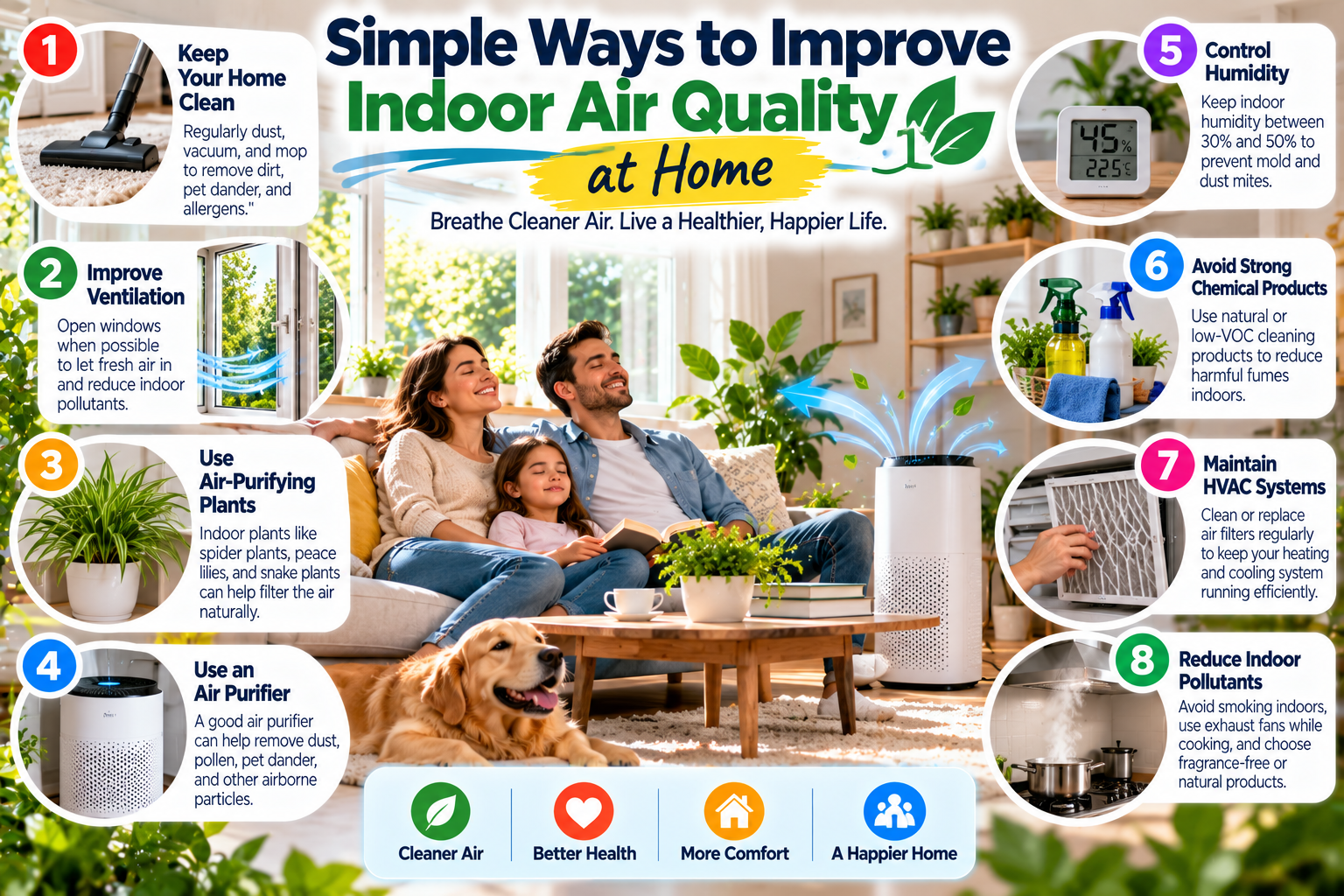
One of the simplest ways to increase ventilation is to open windows and doors when outdoor conditions make it appropriate.
Fresh outdoor air can help replace stale indoor air.
However, opening windows isn’t always the best option. If outdoor air quality is poor because of smoke, heavy pollution, dust, or other conditions, keeping windows closed may be more appropriate.
Quick check: Before opening your windows, consider the outdoor air conditions in your area.
Ventilation should improve your indoor environment, not bring more pollution inside.
2. Keep Dust Under Control
Have you ever cleaned a table and wondered how it became dusty again so quickly?
Dust naturally accumulates in homes.
Regularly clean floors, shelves, furniture, and other surfaces where dust collects.
Using a damp or appropriate microfiber cloth can help capture dust rather than simply moving it around.
Don’t forget easy-to-miss areas such as:
- underneath furniture;
- window sills;
- ceiling fan blades;
- shelves; and
- baseboards.
Mini challenge: Look at the top of one piece of furniture you rarely clean. What did you find?
3. Vacuum Regularly
Carpets, rugs, and upholstered furniture can collect dust, hair, and other particles.
Vacuuming regularly can help remove some of this material.
If your vacuum has filters, check and maintain them according to the manufacturer’s instructions.
A vacuum with a dirty or incorrectly installed filter may not perform as intended.
And yes—the vacuum itself needs cleaning sometimes too.
4. Check Your HVAC Filters
If your home uses a heating, ventilation, or air-conditioning system with replaceable or washable filters, don’t forget about them.
Filters can become dirty over time.
Check them according to the manufacturer’s recommended schedule and clean or replace them when required.
Not all HVAC systems use the same filters, so avoid guessing.
Check your system manual or ask a qualified technician if you’re unsure.
5. Use Kitchen Ventilation While Cooking
Cooking can produce moisture, odors, smoke, and airborne particles.
If your kitchen has an exhaust system that vents outdoors, use it appropriately while cooking.
No exhaust fan?
Depending on outdoor conditions and your home’s design, opening a nearby window may sometimes improve ventilation.
Also keep your range hood and filters clean according to the manufacturer’s instructions.
6. Don’t Forget the Bathroom
Bathrooms can become humid very quickly.
After a hot shower, moisture may remain on mirrors, walls, ceilings, and other surfaces.
If your bathroom has an exhaust fan, use it as intended and keep it maintained.
Ventilation can help manage excess moisture, which is important because persistent dampness can contribute to mold growth.
If you repeatedly notice condensation or damp areas that do not dry, investigate the cause.
7. Deal With Moisture Problems Early
A small water leak can become more than a plumbing problem.
Check underneath sinks, around windows, near plumbing fixtures, and other areas where moisture may appear.
If you discover water damage, identify and address the source rather than simply covering the stain.
Persistent dampness or significant mold problems may require professional assessment and remediation.
8. Keep Smoking Outdoors
Tobacco smoke contains pollutants that can remain in indoor air and on surfaces.
The most effective way to prevent tobacco smoke from affecting indoor air is not to smoke inside the home.
Opening a window or using a fan does not eliminate all exposure to indoor tobacco smoke.
Keeping the home smoke-free is a straightforward way to protect indoor air quality.
9. Be Careful With Strongly Scented Products
A room that smells strongly perfumed is not necessarily cleaner.
Air fresheners, candles, sprays, cleaning products, and other scented products can release chemicals or particles into indoor air.
You don’t necessarily have to remove every scented product from your home.
Just use them thoughtfully and follow product directions.
If a product causes irritation or discomfort, stop using it and improve ventilation where appropriate.
Remember:
Clean air doesn’t need to smell like perfume.
10. Keep Bedding and Soft Furnishings Clean
Beds, blankets, curtains, cushions, and other fabrics can collect dust and allergens.
Wash bedding and other washable fabrics according to their care instructions.
If pets spend time on furniture or beds, regular cleaning may be particularly useful.
You don’t need to wash everything every day.
A realistic cleaning routine is much easier to maintain.
11. Leave Some Outdoor Dirt at the Door
Shoes can bring dirt and other outdoor material into your home.
A simple doormat can help reduce what gets tracked inside.
Some households also choose to remove outdoor shoes at the entrance.
Choose whichever routine works for your home.
The basic idea is simple: the less outdoor dirt you bring inside, the less you have to remove later.
12. Maintain a Comfortable Humidity Level
Indoor air that is excessively damp can create conditions that support mold growth, while very dry air may also be uncomfortable.
If humidity is a recurring issue, a humidity monitor can help you understand conditions in your home.
Depending on your climate and situation, ventilation, air conditioning, a dehumidifier, or a humidifier may be useful.
Any such equipment should be maintained carefully because poorly maintained devices can create additional problems.
13. Consider an Air Cleaner When It Solves a Real Problem
Portable air cleaners can be useful in some situations, but you don’t need to buy one simply because it appears on a list of home essentials.
If you’re considering one, choose a device appropriate for the room size and the type of particles you want to address.
Pay attention to filter replacement costs as well as the purchase price.
An air cleaner should complement basic source control, cleaning, and ventilation—not replace them.
14. Pay Attention to Unusual Odors
Your nose can sometimes alert you that something has changed.
Persistent musty odors may suggest a moisture problem.
Burning smells may indicate an electrical or appliance issue.
Gas-like odors can require immediate attention.
Don’t simply cover unusual smells with air freshener.
Find the source.
If you suspect a gas leak, electrical problem, or another immediate hazard, leave the area when appropriate and follow the emergency guidance of your utility provider or local emergency services.
Try the 10-Minute Fresh-Air Challenge
Want to improve your home today?
Set a timer for ten minutes and choose three tasks:
☐ Check one HVAC or appliance filter
☐ Dust one forgotten surface
☐ Look underneath a sink for moisture
☐ Clean an appropriate ventilation cover
☐ Vacuum one rug or carpeted area
☐ Check your bathroom for persistent dampness
You don’t have to transform the entire house.
Just start with one room.
Do You Need to Buy Anything?
Maybe—but don’t start there.
Before buying an air purifier, dehumidifier, or other device, first consider the basics:
Is the home adequately ventilated?
Are filters being maintained?
Is there a moisture problem?
Is dust being controlled?
Is there an indoor source of smoke or other pollutants?
Sometimes solving the source of the problem is more useful than buying another appliance.