
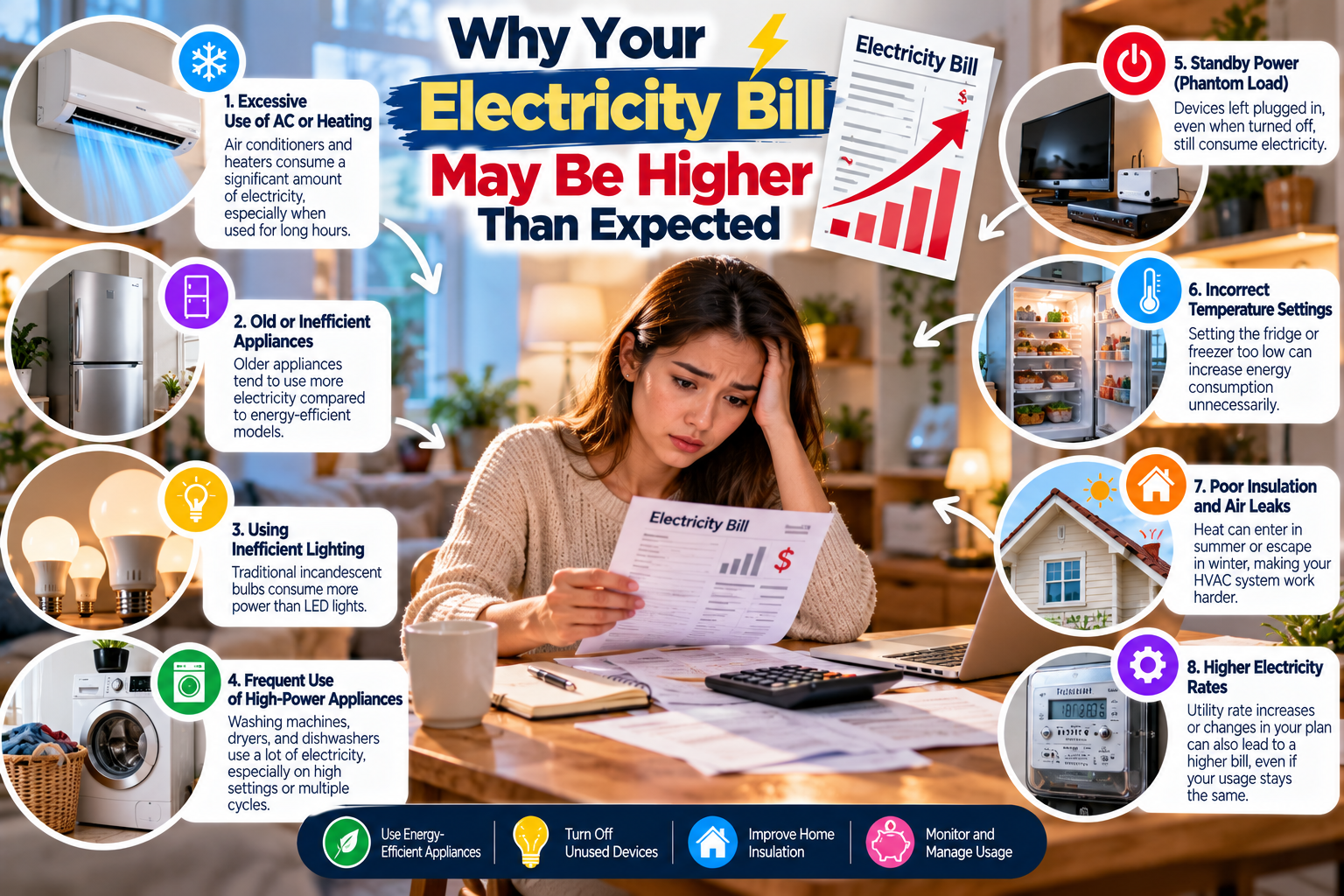
You open your electricity bill and immediately think:
“Why is it so high this month?”
You haven’t bought a new television. You haven’t added another refrigerator. Your daily routine seems almost the same.
So what happened?
A higher electricity bill doesn’t always come from one obvious problem. Sometimes it is the result of several small changes happening at the same time.
Before assuming something is wrong, here are some common reasons your electricity bill may be higher than expected.
1. The Weather Has Changed
Think about the past month.
Was it unusually hot or cold?
Heating and cooling systems may need to work longer when outdoor temperatures become more extreme.
Even if you haven’t changed your thermostat setting, your system may be operating more often to maintain the same indoor temperature.
Quick question: Have you been using your air conditioner, heater, or fans more frequently recently?
If yes, that may explain at least part of the increase.
2. You’re Spending More Time at Home
A small change in your routine can affect electricity consumption.
Maybe you’re working from home more often.
Perhaps your children are on vacation.
Maybe family members or guests have been staying with you.
More time at home can mean more lighting, cooking, entertainment, air conditioning, computer use, and appliance activity.
Individually, these changes may seem minor. Together, they can add up.
3. An Appliance Is Working Harder Than Usual
Older or poorly maintained appliances may sometimes consume more energy than expected.
For example, a refrigerator with a damaged door seal may need to work harder to maintain its temperature.
A dirty HVAC filter can also affect how efficiently some heating or cooling systems operate.
Pay attention to unusual behavior.
Is an appliance running longer?
Does it sound different?
Does it feel unusually warm?
Changes like these may be worth investigating.
4. Your Air Conditioner Needs Attention
Cooling can be a significant part of household electricity use in hot weather.
If your air conditioner seems to run constantly, check simple things first.
Are doors and windows properly closed?
Is the filter due for cleaning or replacement according to the manufacturer’s instructions?
Are vents blocked?
If the system still seems to operate abnormally, professional inspection may be appropriate.
5. Your Refrigerator Door Isn’t Sealing Properly
Your refrigerator operates day and night.
Check the rubber seal around the door.
Is it cracked, loose, dirty, or damaged?
Also think about your habits.
Do you frequently leave the refrigerator door open while deciding what to eat?
Small amounts of cold air escaping repeatedly can make the appliance work harder.
6. You Added a Small Device and Forgot About It
Not every increase comes from a large appliance.
Look around your home.
Did you recently add a second computer, gaming console, extra television, aquarium equipment, dehumidifier, portable heater, or another electrical device?
Some devices operate for many hours each day.
Ask yourself:
“What electrical device entered my home recently?”
The answer may provide an important clue.
7. Devices Are Running When Nobody Needs Them
Walk around your home at night.
What is still on?
Lights?
Computers?
Televisions?
Entertainment equipment?
Chargers?
Some devices use electricity even when they are not actively being used, particularly when left in standby mode.
You don’t have to unplug everything. Focus on devices that do not need to remain powered.
8. Your Water Heating Habits Changed
If your home uses an electric water heater, changes in hot-water use can affect electricity consumption.
More showers, longer showers, additional laundry, guests, or other changes can increase demand for hot water.
A problem with the water heating system may also deserve investigation if consumption changes unexpectedly.
Follow the manufacturer’s maintenance instructions and contact a qualified professional when necessary.
9. You’re Doing More Laundry
One extra load may not seem significant.
But several additional loads each week can increase electricity use from washing machines and dryers.
Think about whether your laundry habits have recently changed.
When practical, use appropriate full loads rather than repeatedly running very small ones.
10. Your Lighting Habits Have Changed
Lighting may not be the first thing you think about, but habits matter.
Perhaps the days are shorter.
Maybe you’re staying awake later.
Or maybe lights are being left on in empty rooms.
Here’s a simple challenge:
Walk through your home right now and count how many lights are on unnecessarily.
You might be surprised.
11. The Billing Period May Be Different
Sometimes the explanation is not inside your home.
Check the dates on your electricity bill.
Does this bill cover more days than the previous one?
Also look at your actual electricity consumption rather than comparing only the amount you owe.
Electricity rates, taxes, fees, rate structures, or other billing components may also change depending on your provider and location.
Understanding the bill itself can help separate higher electricity consumption from a higher electricity cost.
12. There Could Be a Meter or Billing Issue
Most unexpected bills have an explanation, but errors or unusual meter readings can occur.
If your bill increases dramatically and you cannot identify any reasonable cause, compare it with previous bills.
Check:
- billing dates;
- recorded electricity usage;
- meter information where available;
- current rates and fees; and
- whether the reading is actual or estimated, if your provider identifies this.
If something still looks unusual, contact your electricity provider for clarification.
Try the 10-Minute Electricity Check
Before worrying about your next bill, spend ten minutes investigating your home.
Check:
☐ Air conditioner or heating use
☐ Refrigerator door seals
☐ Lights in empty rooms
☐ Computers and entertainment equipment
☐ Recently added electrical devices
☐ Laundry habits
☐ Hot-water usage
☐ Your current bill versus previous bills
You may discover the reason surprisingly quickly.
Don’t Focus Only on the Dollar Amount
When comparing electricity bills, look at consumption as well as cost.
If your electricity usage increased, something in your household may have changed.
If your usage stayed similar but the total price increased, look more closely at rates, fees, billing periods, or other charges.
This simple comparison can make investigating an unexpected bill much easier.