
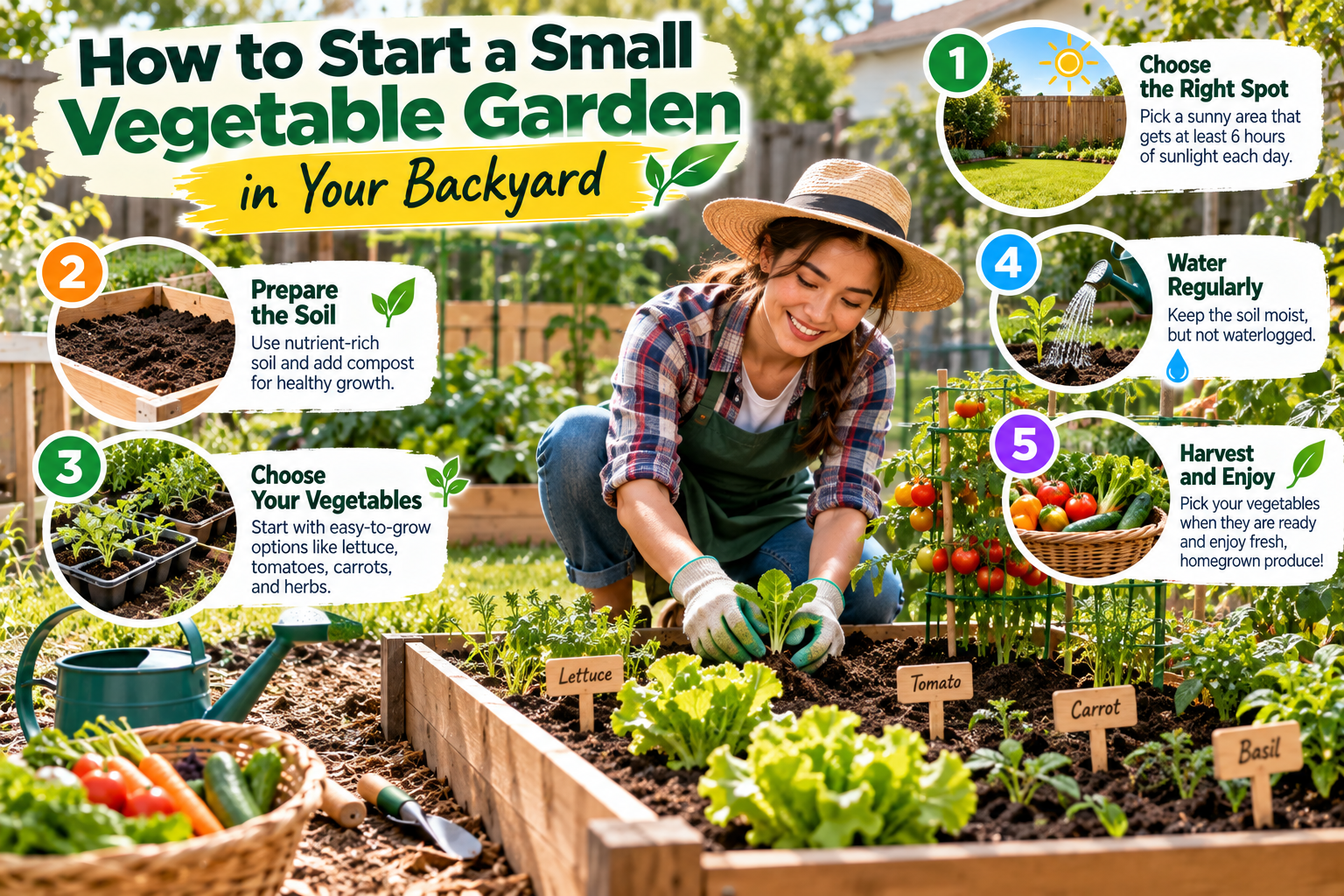
Imagine walking into your backyard, picking a fresh tomato or a handful of leafy greens, and using them for dinner.
Sounds nice, right?
Starting a vegetable garden may seem complicated if you’ve never grown anything before. You might think you need a huge backyard, expensive equipment, or years of gardening experience.
You don’t.
A small sunny corner, a few basic tools, and a willingness to learn are enough to get started.
Here’s a simple way to create your first backyard vegetable garden without making the project overwhelming.
Start Small—Seriously
One of the most common beginner mistakes is creating a garden that is too large.
At first, everything feels exciting.
You buy ten types of seeds, prepare a huge area, and imagine baskets full of vegetables.
Then the watering, weeding, and maintenance begin.
Instead, start with a small garden bed or a few containers.
You can always expand later.
A small garden that you actually maintain is much better than a large garden that becomes stressful.
Find a Sunny Location
Before buying seeds, spend a day observing your backyard.
Where does the sunlight fall?
Many common vegetables grow best with plenty of direct sunlight, although individual plants have different requirements.
Watch your backyard during the morning, afternoon, and evening.
Choose a location that receives suitable sunlight and is convenient to reach.
Don’t forget access to water. Carrying a heavy watering can across your entire property gets old quickly.
Decide Between Garden Beds and Containers
You don’t necessarily need to dig up your backyard.
If you have suitable soil and space, a traditional garden bed may work well.
Raised beds are another option.
And if space is very limited, containers can be surprisingly useful.
Tomatoes, peppers, herbs, lettuce, and many other edible plants can be grown in appropriately sized containers, depending on the variety.
Just make sure containers have adequate drainage.
Choose Vegetables You Actually Eat
This sounds obvious, but it’s easy to get distracted by interesting seed packets.
Don’t grow vegetables simply because they look impressive in a gardening video.
Grow what you enjoy eating.
Ask yourself:
What vegetables do I regularly buy at the grocery store?
Your answer is a good place to start.
Depending on your climate and season, beginner-friendly choices might include leafy greens, radishes, beans, tomatoes, peppers, or herbs.
Always check whether a particular plant is suitable for your local growing conditions.
Pay Attention to Your Soil
Healthy plants begin with an appropriate growing environment.
If you’re planting directly in the ground, learn a little about your existing soil. Extremely compacted, poorly draining, or unsuitable soil may need improvement.
Compost and other appropriate organic materials can help improve some soils over time.
For containers, use a growing medium appropriate for container gardening rather than simply filling pots with random soil from the yard.
If you’re unsure about your soil, local gardening resources can provide advice suited to your area.
Don’t Plant Everything at Once
You don’t need to fill every available space on the first day.
Start with a few plants.
Learn how they grow.
See how quickly the soil dries.
Notice which areas receive the most sun.
Observe which pests appear.
Your first garden is partly about growing vegetables and partly about learning how your backyard works.
Read the Seed Packet
Seed packets contain useful information.
Before planting, check recommendations for:
- planting depth;
- spacing;
- sunlight;
- growing season; and
- expected time to maturity.
If you purchase seedlings instead, check the plant label or ask the nursery for basic growing instructions.
Different vegetables have different needs.
Giving plants enough space at the beginning can prevent an overcrowded garden later.
Water Smartly
New gardeners sometimes assume more water means healthier plants.
Not necessarily.
Too little water can cause problems, but constantly waterlogged soil can also harm many plants.
Check the soil rather than watering automatically.
Watering needs depend on the plant, weather, soil, container size, and local climate.
In many situations, watering near the soil rather than unnecessarily soaking the leaves can also be helpful.
Expect a Few Bugs
If you grow food outdoors, eventually something else may want to eat it.
Don’t panic when you see the first insect.
Not every insect is harmful to your garden.
Some are harmless, and others may even be beneficial.
Learn to identify the problem before reaching for a pesticide.
For small gardens, simple approaches such as removing certain pests by hand, protecting plants with appropriate barriers, and maintaining healthy growing conditions may sometimes be enough.
Make Weeding a Five-Minute Job
Weeding sounds terrible when you imagine spending an entire Saturday doing it.
So don’t wait that long.
Walk through your garden regularly and remove small weeds before they become large.
Five minutes here and there is much easier than dealing with a garden full of mature weeds.
This is one of those gardening habits where a little effort often prevents a lot of work later.
Keep a Simple Garden Journal
You don’t need a fancy gardening app.
Use a notebook or your phone.
Write down:
What did I plant?
When did I plant it?
Where did I plant it?
What worked well?
What failed?
These notes become surprisingly valuable.
Next season, you won’t have to rely on memory.
Don’t Expect a Perfect First Harvest
Your first garden may not look like the beautiful vegetable gardens you see online.
Some seeds may never sprout.
A plant might struggle.
Insects may discover your lettuce before you do.
And sometimes a vegetable simply doesn’t perform well in your conditions.
That’s normal.
Gardening involves experimentation.
Instead of thinking, “I failed to grow this,” ask:
“What can I change next time?”
That mindset makes gardening much more enjoyable.
Your Simple Weekend Garden Plan
Want to start this weekend?
Keep it easy.
Day 1: Observe your backyard and choose a sunny location.
Day 2: Prepare one small bed or a few containers.
Then choose three vegetables or herbs you actually enjoy eating.
That’s enough.
You don’t need twenty varieties.
Start with three and learn from them.
What Do You Really Need to Buy?
Probably less than you think.
For a very small garden, your basic needs may include suitable seeds or seedlings, an appropriate growing medium or soil amendments, access to water, and a few basic gardening tools.
You can add equipment later when you discover a genuine need.
Don’t turn your first vegetable garden into a shopping project.
The goal is to grow food, not collect gardening equipment.